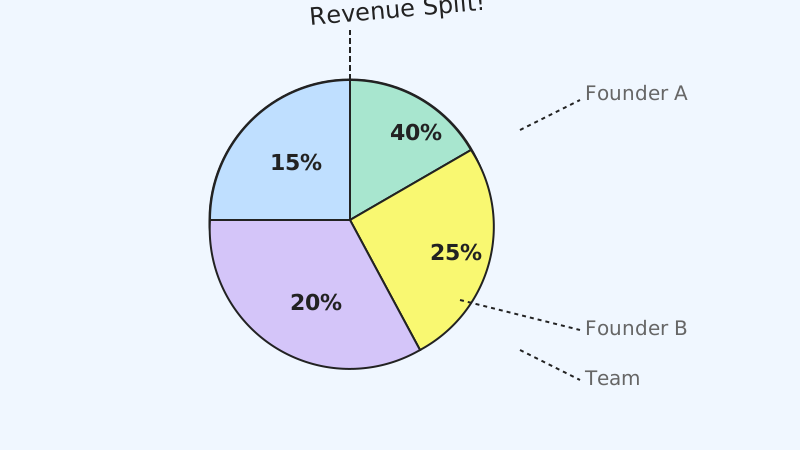
Revenue Sharing 101: A Practical Guide for Startups
Revenue sharing is not new. But it is having a moment.
More startups are using rev-share agreements to compensate early employees, reward partners, and align incentives without giving up equity. And for good reason: it is flexible, transparent, and easy to understand.
But it comes with challenges. If you do not track it properly, rev-share can create confusion, resentment, and legal headaches.
Here is what you need to know.
What is revenue sharing?
Revenue sharing is a compensation model where a percentage of revenue is distributed to individuals based on a pre-agreed formula. Unlike equity, it does not give ownership. Unlike salary, it fluctuates with business performance.
Common structures include:
- Flat percentage: “You get 10% of monthly revenue”
- Tiered: “5% up to $50k, 8% above that”
- Time-limited: “15% for the first 12 months, then renegotiate”
- Role-based: “Sales gets 20% of revenue they bring in”
When rev-share works best
Revenue sharing shines in specific situations:
- Early-stage startups that cannot afford market-rate salaries
- Partnerships where multiple people contribute but traditional employment does not make sense
- Sales roles where commission-style payouts motivate performance
- Creative collaborations where one person builds and another distributes
Common mistakes to avoid
1. Not defining “revenue” clearly
Does revenue mean gross revenue? Net of refunds? After payment processor fees? Define this upfront or you will argue about it later.
2. Not tracking payouts in real time
If your rev-share participants cannot see what they are owed, trust erodes fast. Transparency is not optional.
3. Mixing rev-share with equity promises
These are different instruments. Keep them separate. A rev-share agreement is not a path to ownership unless you explicitly structure it that way.
4. Forgetting about taxes
Rev-share payments are taxable income. Make sure everyone understands the tax implications and that you are issuing the right documents (1099s in the US, for example).
How to track it without losing your mind
Spreadsheets work until they do not. Once you have more than two people or two companies involved, you need a system.
RevShared lets you set up rev-share agreements, track payouts automatically, and give every participant their own dashboard showing what they have earned and what is pending.
No more “hey, can you check the sheet?” messages.
Try RevShared free and bring clarity to your revenue-sharing setup.